I get some emails from people I know or people who think I might help them find a job in the movie business. And some of them are parents, friends of mine, who ask me if I can do anything to get them in "the Business."
Since I taught screenwriting at UCLA extension classes tend to ask me "I finished film school so what now?"
What now.
I can use a line from Robert De Niro who was addressing the graduating students at NYU with two words; "You're f--cked."
Two simple words, Bob. But you're right.
And if you follow my blog way back, you'll know I took a film course and failed. And my best friend failed the same course. And you know what happened.
My friend and I made a short film that was a finalist in the 1976 Academy Awards. The other students never really had the "passion" that we had for movies.
So much for film school.
If some of you out there are students or wanting to write or direct or whatever, this will be invaluable.
In the beginning, as the tv bible says; there was movies and for the most part it was a learning industry, silent movies got longer and then sound came and then 4K came which already is being passed by 6K.
It's a little joke, refers to the quality of digital images. Every year the industry seems to create an even sharper image on the screen or your TV.
Back to the old days.
Way back in the 1920's and 30's, a wannabe writer or wannabe director had a chance at getting a job. There was no film schools, you would get a job carrying water or something and move up the ladder.
As the industry grew, crew people would bring in their sons and daughters, and there were a lot of women screenwriters then too. I'm talking 1920-1940. But very few of the early writers rarely brought in family. And it's kind of the same even now.
Then WW2 came and a lot of soldiers who survived found the GI Bill which entitled writers to get some schooling. But they also found that they had stories from the horrors of war and thus you got great movies made from stories that were real. But again, there were no film schools.
The big change happened in the early 1970's when U. Of Southern California created their film courses. And suddenly there was Francis Coppola and George Lucas and Steven Spielberg, Brian DePalma, Martin Scorsese and John Milius and John Cassavettes as well as foreign writers and directors like Lindsay Anderson and Roman Polanski and many more.
But what was different now is that almost all of them came from newly created film schools and who knew each other. Remember that point - they knew each other.
There were books published about these new kids, The Movie Brats and The Film Director as Superstar and many other books about these new kids on the blog who never really had to fight a war.
These were my generation, and even though I didn't know any of them, (I lived two thousand miles away in a small town of 539 people), I shared one single thing with all of them.
A movie called The Searchers.
A John Wayne movie, although it was realistically a John Ford movie. Ford was a legend in the film industry, he won 6 Academy Awards, still never beaten.
For some reason, The Searchers was one of the best westerns ever made. Our sci-fi stories were more westerns and they were everywhere. But The Searchers had something else to it, there are many articles about the movie, even a remake of sorts but whatever it was, I wanted to be part of it.
I wanted to be in Hollywood.
And so did those other names up there.
And from now on the film schools were mostly becoming writers and directors, without the war stories we watched as kids.
And it wasn't long before other universities saw the money they could make by offering film courses. Now America was spitting out new screenwriters and directors at a very fast pace.
But I didn't go the university way because I got a job at a TV station in the photo department where I learned how to shoot and process 16mm film for our newscasts. I did everything there, photographs, film, shooting rock concerts and models.
It was about this time that I went to the film school with my then-wife and I took the infamous class and she took photography. And that's where I met my friend who also failed. But in truth, I knew more than the instructors and it was mostly for the adventure of hanging around an art school in the beautiful Rocky Mountains.
I then proceeded to work at a half dozen TV stations where I got more experienced and then finally I made Ghostkeeper, (I think you can see it on the Materials).
So I came up, like many more writers and directors, through all the stages, I was a production assistant, a location manager, a soundman and a dozen other jobs. So my way was a little different.
So much for now, don't want to make this too long to read.
The next blog will be about the kids going to school now and what they need and what they're lacking.
Remember Robert De Niro.
BTW I'm the bearded one who looks like Charles Manson, my fried Phil with the shaggy hair.
More of "What Do I Do now" Friday.
Had one hell of a flu-bug or whatever it was, knocked me out for a couple of days wherein I stayed inside everyday. Which is almost impossible in southern California. So I'm just going to catch up slowly this week with some news and some old news.
I'm so over the job I lost a few weeks ago and am moving on, including a new screenplay based on that international incident about a dog being left at a train station by himself, with his toys, some food and a note saying the owner couldn't keep him anymore.
I saw a movie in that immediately when it was splashed on newspapers and TV. In fact I'm sure there's at least a dozen writers who are considering the same idea. So why write it?
Well, this is the breakdown of the writers who "want" to write it. Out of 10, let's say.
1. Two are thinking about it. (Actually a few thousand writers are doing this).
2. One is going to write it next week.
3. Two are writing it.
4. Two have finished it.
5. One is in develoopment
6. One's filming as we talk.
7. One is being released in August.
So where am I?
I started a beat sheet for the dog last week and have a pretty good outline. However I have to clean up those three Hallmark ideas for my producer Ted. I also have to work out a Kickstarter for my travel book, the one called "How To Not Get Beat-Up In A Small-Town Bar."
I have a great pencil sketch artist who will draw pencil art at the ends of some of the stories.
So what else?
I'm going to re-do a budget for my Ghostkeeper sequel, of which I will explain either this week-end or next week. I got killed last year with very few people going onto kickstarter so this time I'm going to make it a lot more simple.
However, this is June 1st, and what that means in Southern California is that each day is overcast and doesn't show sun until around late morning. The joke is that everyone in LA has to see their psychiatrist in order to handle the grey sky.
See you Friday... or sooner
Okay, looks like Dave Letterman isn't here anymore. I tried to watch Jimmy Kimmel and lasted about 5 minutes. Didn't bother to set the other Jimmy nor any of the late, lates.
The trouble with the above copies is just that. They're copies.
Same band, same opening, same lame jokes. Only thing that changed are the faces and then they all look the same anyways.
The trouble is that the late-night talk show is dying slowly and what you're seeing now is the gradual end. The fact is there are too many late night shows, counting Conan.
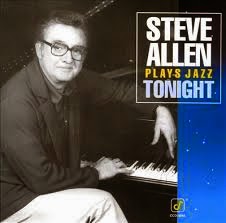
The problem with me on this issue is that I watched the late night talk show start up and grow slowly. My favorite host was Steve Allen, who was truly talented in both comedy and music and did both well.
He was the first to do crazy bits like dropping into a vat of jello or commenting on people walking past the studio at night just to name a few things he did. Whatever you see now, even with Letterman was the result of Steve Allen.
What Letterman did was refine the jokes from both Steve Allen and Johnny Carson. Gags like comedy bits or having kids or animals on the show all came from Steve Allen but were a little more refined through Carson and Letterman.
But Letterman was the end of the late-night talk show from a creative angle. Kimmel and the others are just copies and telling stale jokes to an audience who thinks it's hip and cool. The only remnant of the original talk shows left is Conan who's been dumped onto TBS.
And I don't really think much of other TV icons. Take Carl Sagan, who was truly the introduction into the universe with his series Cosmos. Last year his replacement was Neil deGrasse Tyson who is quite good, but he's not Carl.
And when you look at it, there's a lot of copies who just aren't as good as the original. I still think Michael Keaton was the best Batman and Mel Gibson as Mad Max. Actually much of the new Max, Tom Hardy, is hardly in the new movie at all.
I guess you can say that I'm being a little biased and not giving these newbies a fighting chance.
But I'm not, I have a good selection of friends of all ages and whom agree with me. The original is always the best.
Sort of like those people who read a book which becomes a movie still prefer the book. The joke goes like this; "Two goats are eating garbage and one begins eating some old film. His buddy asks how it tastes. The other goat says "the book was better."
One of the movies I liked and which was from a book was Deliverance. It was just as good as the book. But I guess Dave is gone and Conan will be my new morning dvr.
As they say, change is inevitable.
Only three more days left for watching a truly iconic television star. For those of you in Russia, Ukraine,Germany, France, Greece, Australia and South Korea on this blog, David Letterman is the biggest talk show host in America.
And he's retiring Wednesday.
America's TV talk show began as a radio show back in the 1950's, with Steve Allen (1954-57), a comedian and musician. When he went to TV he was the first late-night talk show host. Allen was a truly gifted personality, and Letterman is closer to Allen than any of the other talk show hosts that followed. Allen would come swinging down in a bird costume over the audience or play his piano while a TV camera outside the studio would show people walking by with his comments. Allen was my favorite of all the hosts.
After Allen left, a very different host followed, Jack Paar (1957-1962) who was notorious for not listening to the network, in fact he walked off once right in the middle of a show. But the biggest one was yet to come.
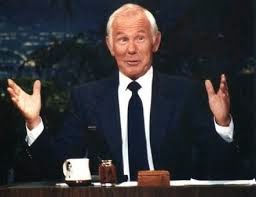
Johnny Carson (1962-1992) who had a game-show on TV took over the Tonite show. Carson was interestingly close to Letterman in that both came from the midwest and weren't that much into the movie star thing. Carson was perfect for his time and he put his brand on the show. He was truly the best in that there weren't really a lot of competitors and none of the competition never lasted.
But when Carson decided to leave in 1992, a battle ensued as to who would be heir to the Carson seat. In fact a movie was made about how Jay Leno (1992-2009) did some backstabbing in order to get the job even though Johnny Carson wanted David Letterman to take over.
Letterman never forgot that and jokes about Jay on Letterman's CBS show often showed up. Instead of Carson's show, Letterman went to CBS where he stayed until Wednesday, May 20, 2015. Making him the longest talk show host of any late night show.
Leno had the show for 10 years but NBC decided he was too old and took Leno off and installed Conan O'Brian, who unfortunately lasted a year before the NBC people decided to put Leno back.
Conan was kicked out but resurfaced on TBS, a cable network.
So that's the history.
And why is Letterman different.
As with Johnny Carson, Letterman wasn't a Hollywood insider and a lot of his humor related to those audiences in the mid-west. He was just a guy who would get actors on his show but also a zoo guy who would bring animals to the show or kids who did bird songs. He brought ordinary people into his shows, the crew and other employees, guys who were fired out of rockets, dogs that jumped water, almost every type of person was on his show. Not in the audience but on stage. He'd give a jacket to someone in the audience. And the Hello Deli operator who had a deli under his studio and who featured Letterman sandwiches and sold Letterman gear as well. You don't see that on the glossy, loud night-time shows elsewhere. And he always referred to someone in the audience who probably asked him something in the warm-up before the show went on.
That touch is what people liked him, he was ordinary, like all of us. A little more money of course, but he never really mentioned it.
But my favorite Letterman bits was at Christmas where he had two people on, one was Jay Thomas, a minor comedian but who repeated his story about the Lone Ranger every year for at least ten years. And to top it off, Darlene Love would sing Merry Christmas Baby also.
Christmas won't be Christmas anymore for me, although I have youtube. Friday's show had comedian Norm MacDonald on who barely make it to the end of his routine.
There's only two shows left, tomorrow Tom Hanks is on and the final show Wednesday on CBS is a collection of surprises.
So far you've learned about writer-killers and how they can spoil a screenplay mostly because they don't really help you along.
Sure, you just think that I'm just a poor sport and that they are the good guys.
Maybe they are, but Joe is known to tell writers like me (twice) very little except that he wants action, action, action. But once I started writing, he began changing everything I wrote. And the script analyst who seems like she's never done this job before, actually has never done this job before. I think she had a degree in music.
But getting down to the script, I felt from the beginning that it would not be a fun time. Here's why.
Some years ago I worked with a good producer named Steve. Steve read one of my scripts and that was enough for him. We talked about ideas and actually Steve came up with one. It was based on a screenplay that I wrote and directed called The Tower.
The Tower was a great idea, it was about technology in a office tower that uses heat from the bodies of people who work there everyday. This is actually real. But I made it for around $40,000 with a local TV crew and non-union actors and it turned out not that great.
Although one fan emails me now and then asking permission to re-do the film.
Steve said I should write the version of The Tower the way I wanted. The deal was signed in a few days. I was going to rewrite a story for Paramount TV.
Now here's the difference between Steve and Joe. Steve had his cards on the table from the very beginning, he liked the idea and most of all he trusted me. And I trusted him. I went away for a few weeks and wrote the script which was now called Dream House.
Steve read it, gave me a few things to change and that was it. I even ended up in Canada where they were shooting Dream House and did a few changes.
See how easy it is when you have someone who you can trust and who isn't afraid that you're going to take their movie away and say that you don't get their idea.
Remember this; Joe's first meeting with me rendered two things;
1. Family in jeopardy.
2. Bad guys after them.
3. Woman is lead.
4. Thriller.
So there you go. That's the whole story. That's all he said.
What's missing?
A story.
Sure, that's my job. But whenever I wrote something, Joe didn't like it. Then I rewrote and he didn't like it. Then they gave me some money and I didn't like it. Then he changed the entire treatment and I had to start over again.
And he didn't like it.
Notice the difference between Steve and Joe?
I remember a story from a director friend of mine where a producer kept after the writer to write "those precious pearls" that writers do.
So you can see this job was not going to work out, I didn't trust Joe for anything, even going back to the time he went into his office saying that he had a Canadian writer who's going to write a script for free. And that was about 20 years ago.
Some people never change.
So what does a writer do when he's fired. The very nice script analyst called me and softly said they were going with another writer.
It was a job but we didn't see eye to eye on the story and it would never really work out anyways. I've worked with mostly good producers and when you're working with someone who's confident and will let you do your job, well, it's a lot of fun.
When you work with someone who doesn't trust you, nor anyone else, and who talks behind your back, it's not fun. And for the book, I'm not the only one who thinks like me.
Bottom line is that he will make his movie and in the end it doesn't really matter to him, me or you.
The next day I started a screenplay that I've been wanting to write as a spec, which I prefer because there aren't a lot of Steves out there in the big bad world.
I have three ideas floating around Hallmark.
And maybe I just might write my Christmas script.
Christmas on Mars.
Really.
I think I mentioned that I got a writer's job which began in January and ended last week. I didn't want to do too much blogging on it because I wasn't really crazy about it and I didn't like the producer.
But last week they fired me. In Hollywood the actual words are "We're going to try this with a new writer."
And I wasn't all that upset about it. For one thing, this was the first time in 35 years that I was let go. Really. Actually I even took over a few jobs from writers who were let go.
So I'm not all that upset.
But I could have used the money. I did get some and it could be that I might get more as there are Writer's Guild of Canada issues. But I'll let you know what happens with that. WGC doesn't like it's writers to get pushed around, WGA will send out hit men.
So I'm not all that upset. At all.
So here's the sordid story.
In January an agent friend put me up for the job based on my screenplay, The President's Heart. It was a big, wide story sort of like The Bourne Identity. My story was about an alcoholic doctor in Paris has to go with a woman marine in a helicopter to rush a living heart to the President, who is a woman.
The Black List regards it as this:
“The premise of a presidential heart transplant is strong and commercial. It
takes a personal need with a ticking clock, and transforms into a global crisis
with a journey at its center. It's a smart base for an affordable political thriller
which still has worldwide stakes. Making the protagonist a doctor was an
intelligent decision, and introduces a fish out of water element that always
plays well in a thriller. The setting - a chase from Paris
to Luxembourg
- is perfectly commercial.”
Cool, eh?
So what did these guys want?
A family in the woods chased by two bad guys. Nobody else.
First thing is, there is no comparison between the two stories. Secondly the producer was a guy I dislike, in fact a lot of people disliked him. He always likes to get writers for free. In fact, once I caught him talking to someone on the phone that "we have a Canadian who will write the script for free." His name is Joe. That "Canadian" was me. And I didn't work for free.
I hadn't seen him for years but now he was with a new network called UPTV. And if you've never heard of this network it because it was originally a gospel network.
So they wanted to make a story about killers chasing a family.
My first reaction was "Is this okay with the gospel people?"
He said it "has to be UP-lifting? Get it? UPTV means UP-lifting stories".
Oh, and the family had to pray at dinnertime. Honest.
And the story about a family being chased by bad guys was familiar. It should be, Joe wanted this story years ago and I was that guy who was going to write it for nothing. Funny how things come around.
Joe was re-inventing the same old story.
So here I was, years later, with a guy I didn't like and a story I couldn't really figure out. The only real note Joe gave me was this; "It has to be uplifiting."
There were no other things to work with.
This was the beginning of what writers call "A writer-killer."
I've had a few, they are usually people who have no real talent in anything, sort of middle-management types. And Joe was certainly that.
I wrote a couple of ideas. Nope, didn't like it. I wrote more ideas. Nope.
I had one experience which I speak of often in this blog. It was in Luxembourg in 1998 where I was story editing a screenplay that someone else wrote. An exec-producer showed up and began telling me what to write. Most of it made no sense.
And I'm not being arrogant. In fact the VP at Paramount had asked me to go to Europe because I can fix scripts fast and good.
So the exec-producer (it's a title for someone who doesn't really do anything on a movie) decided to cut 8 pages of dialog in which the female lead and I worked on for a week. I refused to make his changes that would leave her 2 pages.
You don't want to see an actor who has pull on the set learn that her chance to really act in 8 pages go down to 2 pages? No way!! She came on set and simply said "we're shooting Jim's pages."
And it was over.
But here I was, on a new project with a guy who likes to get writers to write for free.
Continued on Friday May 16.
If you are just beginning as a writer, you probably may have heard of a particular species of producers that can make you crazy. Probably some of them have already worked with you.
They are known as "writer-killers." Or "w/k"
Right now, I am working with one of them and even after all these years, find myself wanting to throw all my pages away and go to the desert for a year.
Why?
Because these people, mostly men, can do that to you. So who are they?
They are mostly middle-management type people, who really don't have a heart for screenwriters or screenplays, but that they want to be acknowledged to have some importance in whatever you're writing.
Just last week, I received notes that I was to change an entire treatment. My eighteen pages were to be thrown out because he decided to do it another way.
Great.
Then he gave me the changes, which basically were information about characters, in other words, something that you write as description rather than content.
It works like this; the w/k says about one minute things about what the character is thinking or remembering the love he lost years ago, or whatever.
But it all comes down to something you can't really write. Why? Because you're writing something that can't really be written, in a screenplay you write the present moment. That's the difference between novels and screenplays.
For example; in a screenplay I write "he walks across the street". Ok? But in a novel you can write "he walks across the street -- and remembers the woman he left behind."
See the difference? You can't show "and remembers the woman he left behind."
So how do you portray that thought? You might use it further ahead. But you can't really show it. The only thing you can do is voice-over, but everybody hates v/o.
But the w/k thinks his idea is brilliant. And if he has some power, he can add a few more ideas that can't really be put into a screenplay as he sees it.
So why get mad?
Because they will hang onto their dumb idea enough so that you have to find a way to somehow keep them happy.
Now if you have" f...k you" money then you can walk, but most writers don't have that kind of money and need the job.
Some of you might say that the producer should have all the cards, that you do what he says. My take is that any producer you won't let you write anything except what he wants, is a bad producer.
Fortunately, I have worked with a lot of good producers and the difference is this; they're not scared of what you will write or not write, and they trust you, which is the most important thing. And they are great people who will work with you again and again.
But here's a good example that happened to me about a w/k who lost his battle. It rarely happens but this time, I won.
I was working on a film in Europe with a producer who was a friend and who rarely bothered me with anything, except maybe a logistical change (e.g. change living room to garage). But halfway through an exec-producer entered and from the time we met, it was battle after battle.
Okay, I'm not a timid writer, and I can be a jerk sometimes. But only when I get these kinds of people. And after 35 years, I know the game.
This incident occurred when I had written an 8-page scene with the leading woman, in this case a well-known actress. I had spent a few days with her on that scene which would be her chance to do some good work.
But the next morning the entire crew got new pages! This happens when there are changes in the scenes. This time, the scene I wrote was only 2 pages. Six pages taken out.
Something I didn't write.
Well-known actress caught me in the hotel and asked why I changed the scene. It was all new to me, and I knew who did it. The exec producer. Fortunately she had the power over him and went out on set and said "We're doing Jim's pages." The lesson here was what the exec had to learn; don't take away lines from the star.
Now this was enough for any writer to hear.
But I actually had more power than the exec prod because I was also working for the head of TV at Paramount and I would talk to him via phone often. But I didn't have to do anything, as famous actress saved the day.
Unfortunately I don't have that power on this project, but it's not as big of a project either. Regardless, beware of writer-killers. You'll know them when you listen to what they want you to write.
Lesson learned? Be friends with the actors, they will save you butt when you need a friend. Actors and writers are similar in that they are mostly chosen because of their looks and their pages.
And we're all alone most of the time in small rooms.

.jpg)