I think I mentioned that I got a writer's job which began in January and ended last week. I didn't want to do too much blogging on it because I wasn't really crazy about it and I didn't like the producer.
But last week they fired me. In Hollywood the actual words are "We're going to try this with a new writer."
And I wasn't all that upset about it. For one thing, this was the first time in 35 years that I was let go. Really. Actually I even took over a few jobs from writers who were let go.
So I'm not all that upset.
But I could have used the money. I did get some and it could be that I might get more as there are Writer's Guild of Canada issues. But I'll let you know what happens with that. WGC doesn't like it's writers to get pushed around, WGA will send out hit men.
So I'm not all that upset. At all.
So here's the sordid story.
In January an agent friend put me up for the job based on my screenplay, The President's Heart. It was a big, wide story sort of like The Bourne Identity. My story was about an alcoholic doctor in Paris has to go with a woman marine in a helicopter to rush a living heart to the President, who is a woman.
The Black List regards it as this:
“The premise of a presidential heart transplant is strong and commercial. It
takes a personal need with a ticking clock, and transforms into a global crisis
with a journey at its center. It's a smart base for an affordable political thriller
which still has worldwide stakes. Making the protagonist a doctor was an
intelligent decision, and introduces a fish out of water element that always
plays well in a thriller. The setting - a chase from Paris
to Luxembourg
- is perfectly commercial.”
Cool, eh?
So what did these guys want?
A family in the woods chased by two bad guys. Nobody else.
First thing is, there is no comparison between the two stories. Secondly the producer was a guy I dislike, in fact a lot of people disliked him. He always likes to get writers for free. In fact, once I caught him talking to someone on the phone that "we have a Canadian who will write the script for free." His name is Joe. That "Canadian" was me. And I didn't work for free.
I hadn't seen him for years but now he was with a new network called UPTV. And if you've never heard of this network it because it was originally a gospel network.
So they wanted to make a story about killers chasing a family.
My first reaction was "Is this okay with the gospel people?"
He said it "has to be UP-lifting? Get it? UPTV means UP-lifting stories".
Oh, and the family had to pray at dinnertime. Honest.
And the story about a family being chased by bad guys was familiar. It should be, Joe wanted this story years ago and I was that guy who was going to write it for nothing. Funny how things come around.
Joe was re-inventing the same old story.
So here I was, years later, with a guy I didn't like and a story I couldn't really figure out. The only real note Joe gave me was this; "It has to be uplifiting."
There were no other things to work with.
This was the beginning of what writers call "A writer-killer."
I've had a few, they are usually people who have no real talent in anything, sort of middle-management types. And Joe was certainly that.
I wrote a couple of ideas. Nope, didn't like it. I wrote more ideas. Nope.
I had one experience which I speak of often in this blog. It was in Luxembourg in 1998 where I was story editing a screenplay that someone else wrote. An exec-producer showed up and began telling me what to write. Most of it made no sense.
And I'm not being arrogant. In fact the VP at Paramount had asked me to go to Europe because I can fix scripts fast and good.
So the exec-producer (it's a title for someone who doesn't really do anything on a movie) decided to cut 8 pages of dialog in which the female lead and I worked on for a week. I refused to make his changes that would leave her 2 pages.
You don't want to see an actor who has pull on the set learn that her chance to really act in 8 pages go down to 2 pages? No way!! She came on set and simply said "we're shooting Jim's pages."
And it was over.
But here I was, on a new project with a guy who likes to get writers to write for free.
Continued on Friday May 16.
If you are just beginning as a writer, you probably may have heard of a particular species of producers that can make you crazy. Probably some of them have already worked with you.
They are known as "writer-killers." Or "w/k"
Right now, I am working with one of them and even after all these years, find myself wanting to throw all my pages away and go to the desert for a year.
Why?
Because these people, mostly men, can do that to you. So who are they?
They are mostly middle-management type people, who really don't have a heart for screenwriters or screenplays, but that they want to be acknowledged to have some importance in whatever you're writing.
Just last week, I received notes that I was to change an entire treatment. My eighteen pages were to be thrown out because he decided to do it another way.
Great.
Then he gave me the changes, which basically were information about characters, in other words, something that you write as description rather than content.
It works like this; the w/k says about one minute things about what the character is thinking or remembering the love he lost years ago, or whatever.
But it all comes down to something you can't really write. Why? Because you're writing something that can't really be written, in a screenplay you write the present moment. That's the difference between novels and screenplays.
For example; in a screenplay I write "he walks across the street". Ok? But in a novel you can write "he walks across the street -- and remembers the woman he left behind."
See the difference? You can't show "and remembers the woman he left behind."
So how do you portray that thought? You might use it further ahead. But you can't really show it. The only thing you can do is voice-over, but everybody hates v/o.
But the w/k thinks his idea is brilliant. And if he has some power, he can add a few more ideas that can't really be put into a screenplay as he sees it.
So why get mad?
Because they will hang onto their dumb idea enough so that you have to find a way to somehow keep them happy.
Now if you have" f...k you" money then you can walk, but most writers don't have that kind of money and need the job.
Some of you might say that the producer should have all the cards, that you do what he says. My take is that any producer you won't let you write anything except what he wants, is a bad producer.
Fortunately, I have worked with a lot of good producers and the difference is this; they're not scared of what you will write or not write, and they trust you, which is the most important thing. And they are great people who will work with you again and again.
But here's a good example that happened to me about a w/k who lost his battle. It rarely happens but this time, I won.
I was working on a film in Europe with a producer who was a friend and who rarely bothered me with anything, except maybe a logistical change (e.g. change living room to garage). But halfway through an exec-producer entered and from the time we met, it was battle after battle.
Okay, I'm not a timid writer, and I can be a jerk sometimes. But only when I get these kinds of people. And after 35 years, I know the game.
This incident occurred when I had written an 8-page scene with the leading woman, in this case a well-known actress. I had spent a few days with her on that scene which would be her chance to do some good work.
But the next morning the entire crew got new pages! This happens when there are changes in the scenes. This time, the scene I wrote was only 2 pages. Six pages taken out.
Something I didn't write.
Well-known actress caught me in the hotel and asked why I changed the scene. It was all new to me, and I knew who did it. The exec producer. Fortunately she had the power over him and went out on set and said "We're doing Jim's pages." The lesson here was what the exec had to learn; don't take away lines from the star.
Now this was enough for any writer to hear.
But I actually had more power than the exec prod because I was also working for the head of TV at Paramount and I would talk to him via phone often. But I didn't have to do anything, as famous actress saved the day.
Unfortunately I don't have that power on this project, but it's not as big of a project either. Regardless, beware of writer-killers. You'll know them when you listen to what they want you to write.
Lesson learned? Be friends with the actors, they will save you butt when you need a friend. Actors and writers are similar in that they are mostly chosen because of their looks and their pages.
And we're all alone most of the time in small rooms.
A movie opened in LA last week called Adult Beginners and a review in the LA Weekly, a hangover of the alternative newspapers that my generation started. What was interesting is that the movie was, in the reviewer's view, another millennial generation storyline.
That storyline, the reviewer said that that generation, starting around 1980, have no real stories to tell because they lack any central point in their lives. She also compared their movies to the movies written by screenwriters who survived WW2 back in the 40's.
I find myself agreeing with her to a point, probably most of you readers are of that generation where superheroes reign and stories of people go to netflex.
Then there's me... the boomer generation, 1946 to 1964. Our movies were, at first, anti-studio movies, stories that we had to ourselves and began most likely with the Beatles and following that, the assassination of JFK, Martin Luther King and Robert Kennedy.
I worked for the Robert Kennedy group in Indianapolis and learned a lot of lessons canvassing homes in the ghetto.
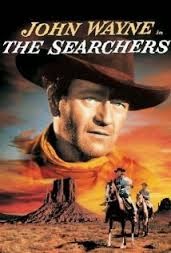
Then there was The Searchers.
You've probably seen my posts on that movie. One that changed my life, as well as the boomer "Movie Brats" as they were called. I suppose I was sort of one myself, not within the real Movie Brats, being George Lucas, Francis Coppola, Steven Spielberg, John Milius, Brian DePalma and Martin Scorsese. They were the first film school directors.
Strangely enough, my favorite movie was The Searchers, at age 10. And when I read bios of the Movie Brats, they too loved The Searchers. I still can't quite figure how that movie influenced so many writers and directors of my generation.
Before them, it was studio directors who more than not likely, became directors when studio heads made them directors. They were also often recruited from England, Germany, Italy and other countries.
I had worked as a TV soundman and graduated to a news cameraman but when I was fired, I moved to Vancouver where I went to film school with my friend Phil Borsos, as well as a 2-month film school in the Rockies, where both Phil and I failed.
The Movie Brats, were called that as they didn't go to various stages of a ladder to reach the top. These guys went for the top immediately. There were changes in the wind, we were the first generation to not have to go to work to help the family.
Initially, their stories didn't really make a noise, in fact, they weren't very good. But they didn't have the studio behind them either. Coppola's movie The Rain People, was made for very little money. Coppola and his crew, including George Lucas who made a "making of.." film just hit the road and made a movie. It's still one of my favorites too.
And they had that one thing; they all helped each other. Today every new writer or director has no group, a bunch of the guys who helped each other. And the beginning of more women directors and writers. Still not equal, but a start.
Then the millennials came with their movies, of which I noticed many of their stories were about going back to their hometown to face an old girlfriend or boyfriend. There are a lot of these plots with millennials. While George Lucas made Star Wars, Coppola made The Godfather, they make Adult Beginners.
The Weekly's reviewer said it like this; you can read it as you want.
In these movies (millennials) maturity isn't a hard-won personal quest - there's a passing-the-buck bitterness that someone didn't give them the memo."
Maybe it's all been done. Maybe all we're doing now is seeing the same movies over and over again. How many versions of Star Wars are there or Star Trek, or Fast & Furious.
What's the last original movie you've seen? One that doesn't have a sequel and plays for longer than one week at your local theater?
Maybe it's not their fault, all they have is what we boomers gave them. But it's a hard act to follow.
I left off talking about my story, Emperor of Mars and how I started the project. The script was shown around to several Canadian producers who didn't really like it. One did, but couldn't find the money.
Just about then I moved to L.A. and had an agent recommended by my director friend Paul Lynch. That agent didn't really do much for me, actually nothing so I left after two years, which is a standard contract with agents.
After a few other low-grade agents I got into a good agency and a reasonably good agent and that's when Emperor came to town. Through that agent I had meetings with every studio and network and about sixty or more independent producers.
And they all loved Emperor of Mars. Or at the least said they loved it.
But nobody made it.
Over a period of several years, the script was optioned at least 7 times. It was "almost made" three times but financing fell through. I don't really know why nobody made it, but they surely did try. Someone said it was because there was no name-actor role, as it was mostly kids.
But it did one thing for me.
While nobody made it, I got a lot of writing jobs from Hallmark, ABC, Paramount, Atlantis, HBO, Lifetime, Viacom, Sci-Fi Channel, CBC, CTV and around thirty independent producers.
And while nobody made Emperor, I still get calls about it.
And that's when I decided to make it a book with the thought that it might get attention that way. I had never written a book and screenwriting is very different as you know, actually screenplays are a little sloppy, a novelist would shudder at how we write action.
I also learned something else. Screenplays are written in present tense while novels are written in past tense. In a screenplay you write "He runs to his car." In a novel you write "He ran to his car and remembered that he had to pick up some groceries."
It was different for me but I finally caught on. In a screenplay everything is now, unless it's a flashback, otherwise you are in the present. A novel allows the reader to go into the mind of the actor, and you rarely do that in a screenplay, and would be called flashbacks.
So back to the Emperor of Mars.
This year, I found a producer who's interested although I've heard of someone having interest in Emperor many times so I'm not exactly excited.
But maybe the Emperor of Mars will come back.
I guess the point of this 2-part story is that screenplays can often take a long time to make, a Hallmark movie I wrote in 2006 was shown around and stayed at Hallmark for nearly four years before it was made.
Most movies are like that, they linger around for years before someone decides to make it.
And here's the other part of a script that gets made.
It's just pure luck.
My Hallmark movie was made in 2010 and when I spoke to the woman producer who gave it a go, why she chose my screenplay, was it because of the brilliant writing?
Well, no, it was because a teenage girl in the movie was very similar to her own daughter.
So it wasn't my magnificent writing and my colorful situations.
It was because one character looked like her daughter.
So there you go.
Over the week-end I met an old writer friend whom I hadn't seen for a few years. We got to talking about all the screenplays we either wrote or wanted to write, the ones that nobody bought. I have written a lot of specs, actually around 35 currently on the shelf.
Meaning nobody bought them.
Then he asked me about the Emperor.
Here we go... a long story about a screenplay that was written in 1989, some of you weren't even born. Or maybe most of you.
Anyways...
If you've followed this blog you might have heard a lot of Emperor of Mars, it's been with me since 1989. It was that year that I wrote a story about a 12-year old boy in a small town in the middle of nowhere.
Of course it was me. Who else?
Every writer always wants to write the story of his life, mostly around the age of 12 or so, maybe more. And I always wanted to write mine. You will almost assuredly want to write yours too, so you should listen.
My story was this; I lived in a small town, there was some ethnic discrimination and a beautiful 19-year old teacher who I fell in love with at 12 years old.
Miss Mazure.
There was only one problem; there really wasn't a story. Pay attention if you're going to write your story.
You need to have an idea first. What I had was some scattered ideas that really didn't have a story. I lived in a small town, the teacher was fresh from teacher school or whatever it's called, I had a buddy who was overweight and that was it.
I went to school, I went home.
There's no story there, is there? You need a narrative, as some people say, or in plan words. I needed something else, a maguffin as Hitchcock called it. It's something that brings all the other pieces to the table and connects them.
In other words, a plot.
What was my plot? Following the teacher in the small town, dealing with discrimination, and an 11-year old girl who followed me, bent on getting married some day.
But I needed something else. Something that connected all these pieces.
I had my idea probably since I was a teenager and it wasn't until 1989 that I found exactly what I needed.
The Emperor of Mars.
I was working at a TV station in Calgary, Alberta and one day I opened a newspaper and saw my answer.
There, in bold letters was The Emperor of Mars.
Actually it was a reprint of an event that happened during the late 1950's. It began with someone who called himself by that name, and that he was coming to Earth to tell all of us the secrets of the universe.
And this speech was recorded on radios all over the western United States and Canada. I knew I had my movie.
The Emperor was coming to my hometown. (By this time I was living in a city far away from my tiny home town of 539 people).
The Emperor was what was going to paste the individual stories together. This was the narrative, or the plot, or the storyline or any word you want to use.
Once I had that story, it literally wrote itself and it took me maybe four weeks to write. I usually write a screenplay in that time, it's not a judgement on anyone else, I just happen to write fast. I can do it for about three hours at the most, from 8am to 11am. After that I'm completely exhausted and spend the rest of the day looking for more work and dozens of little projects I throw myself into.
Right now, for example, I am writing this blog. Once I finish it I'm starting work on a screenplay that was commissioned for a network.
Anyways, I also found some money to write it. In Canada the government and pay channels offer some money for writers to carry them over the long term of writing a screenplay.
And yes, I wrote this in four weeks as mentioned. I didn't tell them it took that little time. But what did they care. They gave me $15,000 overall. And that was 1989! I could live on that for a year back then. Okay, maybe six months.
But if I had known what Emperor of Mars would do for me, I would never have believed it.
Stick around for Friday to catch Part 2 for the rest of the story. It gets way better when Hollywood greets it.
And you can see the book under the Materials on the left hand side of the blog.
I happened to catch The Way We Were on TCM, with Redford and Streisand. Not particularly a favorite of mine except for one thing; that song with lyrics like "Memories like a faded photograph."
It had me. The music plays throughout the whole movie and the brilliance of it is that it can work over fun scenes, sad scenes, strong scenes, in short everywhere. And it works perfectly. The movie was a huge hit as was the song, sung by Streisand herself.
And the girl never got the boy, nor did he get the girl.
And they don't die. That last scene when they meet again on a New York street, the audience cried their hearts out. Redford looks at her, reminding me of how good an actor he is as far as the pseudo-Redfords who are trying to be.
That brought a bunch of endings to movies that, like the one above, had sad endings. And you rarely see that now, apart from those movies by Nicholas Sparks. There also was a recent film called The Fault of Our Stars with Shailene Woodley who is trying to be the next Jennifer Lawrence with little luck.
But look back at the great sad endings.
The one most likely the best was of course, Casablanca (go to your imdb if you're under 40), where Bogart lets his former lover, played by Ingrid Bergman, escape Casablanca to freedom while he remains. Although he still has a friend in the local police chief.
Then there's Butch Cassidy & The Sundance Kid, where the two real-life outlaws were portrayed by the hottest guys in town, Paul Newman and Robert Redford and when surrounded by soldiers in South America, run out of a building into a hail of bullets.
But we don't get to see them die as the last frame is frozen forever.
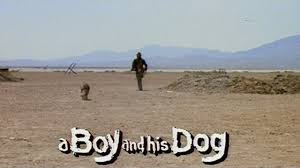
And here's another ending that is sort of a different ending. It's a movie called A Boy and His Dog and is a futuristic landscape of desert where a young Don Johnson is lured by a girl and leaves his trusty dog find a civilization underground.
When he realizes he's going to be killed he escapes with the girl and when he reaches the surface again, finds his dog starving and very weak. The rest is never seen but very much explicit. They eat the girl.
 Okay, back to sad ending movies;
I think the most important thing is that they lived life; we've never been to Casablanca nor did we hang out with Bonnie and Clyde or Cool Hand Luke.
Or Julie Christie in Doctor Zhivago riding on a Russian street car and missing the love of her life who sees her after years and years and runs to catch up but has a heart attack. It also had a great music score.
Nor did we meet Jack Nicholson in One Flew Over The Cuckoo's Nest, or William Holden in The Wild Bunch or even Tom Hanks in Saving Private Ryan.
So why do we like them?
Some psychs say that it's because this:
People find comfort in seeing other people die because it's rather them than us. It's sort of like a horror film, we can see it but we're not in it.
Okay, I didn't mention Love Story with Ryan O'Neal, but I guess since it was such a hit movie, with song, it might as well be with the rest of the group.
But give me The Way We Were and the last scene where Streisand brushes Redford's hair like she did years ago, I already have my own memories coming to the surface.
And that's what it's all about. Right?
Finished the "treatment" on the project I was hired on. Yesterday I sent it away to the person who has a title of "Director of Script Development", usually a woman because they are paid less and work harder. Don't blame me, you want the reality, that's the reality.
I worked on a TV show back in the 90's as a story editor for one big episode as well as working on some of the hired writers' scripts. The three writers had an assistant, a woman who was learning from these guys. However, it didn't take long for me to realize that all she did was bring coffee and copy scripts.
I took her aside and told her to tell the male writers to get their own coffee and to tell them she's supposed to be here to learn. She didn't really want to push it, but instead worked with me on the big script I was doing and learning a hell of a lot more than bringing coffee.
The payoff was about five years later when I was at a production company and she appeared and now was a story editor and writer and told her co-writers about how I gave her more ideas and work ethics than any of the others on the previous show.
Yeah, sometimes I can be nice. And it's not because it's a woman, it's because someone wanted to learn and some others didn't want her to.
Anyways, yeah, a nice guy, that Jim... blah blah.
But getting back to the treatment.
The treatment is basically what I built from a handful of ideas from the producer and director, which wasn't very much, basically they wanted a story around a family in jeopardy. It had to be in the woods and they had to be threatened by hunters.
And the family had to have their own problems, basically a screwed up family who needed some major "time out."
I always like to start this kind of story with a heart, so to speak. You can always bring down a complex story with heart. But how?
My way is this, watch Die Hard.
Bruce Willis killing bad guys?
Wrong.
The heart of Die Hard (hey, that sounds like a song!) is very simple. Extremely simple.
It's about a man trying to win back his wife.
Now most of you have probably not seen the first Die Hard, and to speed it up, the movie shows Bruce Willis coming into LA on an airplane, In those first ten minutes we learn this:
He's an average NYC cop coming to see his wife.
He's scared of flying.
He carries a gun.
His wife works in LA.
It's Christmas.
It's all there, the story is plain as day.
He's a guy trying to win back his wife.
What about the terrorists?
They're one hell of an obstacle to overcome and Bruce has to fight them in order to win his wife back.
The movie is basically that.
And that's why the first Die Hard worked so well. It had a story with heart. The sequels were okay, but would never be as good as the original.
And now you know why?
And why good movies always have that heart and bad movies don't.
While I don't really like the Furious movies, I noticed that this last one, Furious 7, had heart. People cried. Not because of the stunts but because of Paul Walker. Ironically that gave the movie it's heart.
And with heart, you can never lose. Two good examples.

.jpg)